I had a wonderful conversation with a taxi driver in Dublin recently, as you do, on the state of our country. I was asking him how the mindset is in Dublin, not living there myself, and how the doom and gloom is affecting people.
During the course of our conversation, it hit me how much a recession is like that awful period in between getting diagnosed with a life threatening illness, and making a decision on a treatment plan, from my own experience.
Previously, I couldn't see why we were so stuck in a rut. Why we couldn't just seem to pick ourselves up, dust ourselves off, and get moving, get positive, get to changing things for the better. Now I think I know why...
I know there are companies, and organisations, and people in Ireland who are all attempting to protect themselves from the infectious state of our negative media and their ever darkening pessimism; to keep on trying, keep on pushing, keep on working towards an eventual solution. But as for the majority...
After my enlightening conversation, I think the solution is clear:
Cancer: You think you are fine, healthy, but you find a lump.
Doctor tells you it's nothing.
You want to believe everything's ok. You are not sick.
Country: Rumours circle that something is wrong, people ignore it.
Keep on buying houses, keep on building houses...
Everyone wants to believe everything's ok. The crisis is not a crisis.
Cancer: Lump gets bigger.
You get it checked out again, it doesn't look good -
Panic sets in - how big is the problem?
Must get some tests...
Country: More people start saying that the world is going to end...
Banks buckle under the pressure.
Can't hide it anymore - how big is this problem?
The country gets some tests...
Cancer: You are told, it's in your breast, you have to get it removed, but once that's done, you'll most likely be fine.
Personal sacrifice = solution.
Country: The banks are screwed, but they just need x amount of a bailout, and that should solve it.
Little bit of tax payers money being wasted = solution.
Cancer: So you have the operation - and you feel good, tests show everything's fine.
But you have suspicions... you start to feel more lumps around your neck - that's not good.
You head back to the doctor - get more tests.
Country: So banks are bailed out - everything is good..
But then the banks seem to need more money, looks like the financial problems of the country won't be solved with a quick fix.
Need to investigate more.
Cancer: They find, low and behold, a whole cancerous system in your chest that is inoperable.
Shit.
Prognosis:
Doomed.
Possible solutions?:
Chemotherapy = losing hair, losing weight, puking, low immune system, low energy = suffering
Radiation = long term damage, potential secondary cancers caused, sore skin, everyday treatment = suffering
Or both.
Will it be enough? Probably not- you'll probably need more, and more and more.
Action plan: Check it on the internet, read all sorts of opinions, educate myself on the disease.
Results?:
Determine the doctor's decisions to be wrong - they should have checked my neck first, they should have done the scan first, the first doctor should have noticed it, they say too much chemotherapy, they say too little chemotherapy...
How I felt?:
Fearful, panic stricken, helpless, out of control.
Country: You know the deal.
Prognosis:
Doomed.
Possible solutions?:
Cut backs = less money, fewer jobs, more poverty, less services, more sadness = whole population will suffer
Higher Taxes = less money, fewer jobs, more poverty, less services, more sadness = whole population will suffer
Will it be enough? Who knows?
Action plan: Check it on the internet, what happened in the past, educate ourselves on the country's finances... we are all experts.
Results?:
We determine the politician's decisions to be wrong - they should have blah blah blah...
How we feel?:
Collectively:
Fearful, panic stricken, helpless, out of control.
So here we are - stuck in that awful moment between diagnosis and action plan.
What do we do? What's the best route to take? What if we make the wrong decision? What if it just keeps getting worse? Will it spread? Will I lose my job too? Will my lungs be affected as well? My liver? If we wait too long to treat, will it get worse? Who can help us?
With cancer, it's glorious to be able to put big decisions in the hands of your doctor - someone who knows better - that you can trust to try his/her best, so you can concentrate on making your life the best it can be under the circumstances.
With our country, we need someone to step up and say they are the "doctor", and that they will try to fix us. That we can put our trust in them.
With an action plan in place, even if it consists of a long path of suffering in order to attain ultimate release, it's a blessing, because then we can start the process of pulling together, working together and getting on with it. It would be nice to be finally doing something to get better. Sitting and waiting and panicking in fear is shit.
Out of all pain comes growth, and learning and huge change, change for the better, change for the smarter, and change that impacts the long term, that inevitably makes life much much better for all of us.
But with no such doctor figure, we all seem to be in limbo, waiting for someone to take action. I can handle suffering if I know it's for an eventual solution, but waiting in fear and panic is worse than any chemotherapy. So could our politicians please do something, to try to regain our trust and to give us an action plan please?!
Monday, July 27, 2009

Wednesday, July 8, 2009
Jack of all trades or master of one?
I am reminded of a post I wrote about mutantspace.ie, where you can donate a few hours of your time per week in what you are good at, to get other resources in return, and I was faced with the question : "What am I good at?".
With the recession kicking, I refuse to indulge in its negative connotations, however it does bring up the question in all of our minds - that if someone has lost their job, or their company, that was developed through years of struggle, on the way to earning expert status in a particular field, do they have to fuckinhg start at the bottom again?
I bet they are left wondering: "What am I good at?" or more likely: "What will someone pay me to do?" How depressing to find yourself at the bottom of the heap again, at the back of the race.
I'm still no further down this personal line of inquiry, and the impatience is making me weary, the frustration of having to wait, and work, and be determined, and be passionate, and do what I love is wearing me down. I am impatient to be an expert. Especially since what I am working towards being an expert at seems to alter daily, and then I'm constantly back at square one - 10,000 hours (according to Malcolm Gladwell) from expert status.
It's all envy, envy of people who are Tai chi teachers and can hold tai chi classes on Kilkee beach (Tues & Thurs at 10a.m - 12 if you're interested); envious of people who have meditated for years on end, and have reached clarity of mind, envious of those who have published books and have a smooth stream of income, envious of people who are successful chefs, or entrepreneurs, even those people who have a large following on twitter, I envy.
Perhaps it's the stage I am at in life, that stage where it seems like everyone around me is an expert. That or I'm just having a bad week.
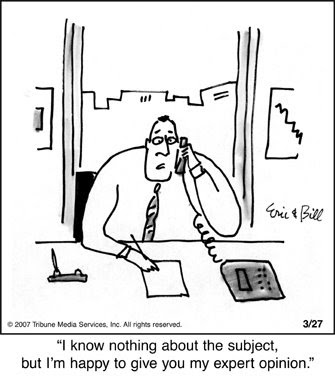
It feels like I'm always playing catch up, and I'm not the only one - there are short cuts advertised everywhere for mugs like us - Bill Harris of Holosync claims you can reach the mental level of a person who has meditated for 20 years in only a few months; slow starters to twitter are tempted to cut corners by following links the promise: "Get 400 followers on twitter here". Why are we always trying to catch up on those random few who managed to invest their time in a noble cause right from the start, or so it seems, and now the "gap" between them and us just widens into an expanse so great that we dare not begin the journey because we know who has already won the race.
It doesn't help that we are running events that surround experts - these illusive people who we pay to see, to hear their story of how they did it - how they managed to get through the frustration and emerge, triumphant.
But is there a day when you turn around and say, "Now, I'm officially an expert"? Or is there always someone ahead of you?
I think most of us pay to see these experts to be inspired, to keep our heads above water, and to be reminded that it is possible, but it takes time. However there is a tiny part of our brains that listens to the expert's life story with a hint of delirium, we perk up our ears, gullible and hopeful fools, waiting for that one expert to turn around and say - you know, it wasn't a lot of hard work and persistence, it wasn't 10 years of working nonstop with determination, and drive, and consistency and never giving up. I just woke up one day, and I had made it.
But why does our society reward people who are masters in the first place? Instead of a jack of all trades? Why do we revere people who are at the top of a single tree of expertise, in the middle of a forest of knowledge?
What I listen for now, hopeful, gullible Ellen is for the expert to say, "I liked lots of different things, and it turns out, I was rewarded for never choosing only one or two. Now a lot of people pay me just to be me."
I don't want to be a master of just one area. I think the world has so much more to offer than sticking your head in one particular topic and following it for a lifetime. It's easier, (is it?) to just be a Biomedical Engineer for instance, and work your way to the top... but when you're at the top, what then? With the world opening up, and knowledge so readily available, it becomes almost absurd to concentrate all your energy on just one theme.
So instead of trying to follow the common rules of society which state that you need to be a master of one thing, how boring is that! I am going to buck the curve, (to make myself feel better) and open up to the possibility of the alternative which is being interested in, and average at, a lot of things. I am now officially a master at not being a master. So hands up who'll pay me for that? ;)
With the recession kicking, I refuse to indulge in its negative connotations, however it does bring up the question in all of our minds - that if someone has lost their job, or their company, that was developed through years of struggle, on the way to earning expert status in a particular field, do they have to fuckinhg start at the bottom again?
I bet they are left wondering: "What am I good at?" or more likely: "What will someone pay me to do?" How depressing to find yourself at the bottom of the heap again, at the back of the race.
I'm still no further down this personal line of inquiry, and the impatience is making me weary, the frustration of having to wait, and work, and be determined, and be passionate, and do what I love is wearing me down. I am impatient to be an expert. Especially since what I am working towards being an expert at seems to alter daily, and then I'm constantly back at square one - 10,000 hours (according to Malcolm Gladwell) from expert status.
It's all envy, envy of people who are Tai chi teachers and can hold tai chi classes on Kilkee beach (Tues & Thurs at 10a.m - 12 if you're interested); envious of people who have meditated for years on end, and have reached clarity of mind, envious of those who have published books and have a smooth stream of income, envious of people who are successful chefs, or entrepreneurs, even those people who have a large following on twitter, I envy.
Perhaps it's the stage I am at in life, that stage where it seems like everyone around me is an expert. That or I'm just having a bad week.

It feels like I'm always playing catch up, and I'm not the only one - there are short cuts advertised everywhere for mugs like us - Bill Harris of Holosync claims you can reach the mental level of a person who has meditated for 20 years in only a few months; slow starters to twitter are tempted to cut corners by following links the promise: "Get 400 followers on twitter here". Why are we always trying to catch up on those random few who managed to invest their time in a noble cause right from the start, or so it seems, and now the "gap" between them and us just widens into an expanse so great that we dare not begin the journey because we know who has already won the race.
It doesn't help that we are running events that surround experts - these illusive people who we pay to see, to hear their story of how they did it - how they managed to get through the frustration and emerge, triumphant.
But is there a day when you turn around and say, "Now, I'm officially an expert"? Or is there always someone ahead of you?
I think most of us pay to see these experts to be inspired, to keep our heads above water, and to be reminded that it is possible, but it takes time. However there is a tiny part of our brains that listens to the expert's life story with a hint of delirium, we perk up our ears, gullible and hopeful fools, waiting for that one expert to turn around and say - you know, it wasn't a lot of hard work and persistence, it wasn't 10 years of working nonstop with determination, and drive, and consistency and never giving up. I just woke up one day, and I had made it.
But why does our society reward people who are masters in the first place? Instead of a jack of all trades? Why do we revere people who are at the top of a single tree of expertise, in the middle of a forest of knowledge?
What I listen for now, hopeful, gullible Ellen is for the expert to say, "I liked lots of different things, and it turns out, I was rewarded for never choosing only one or two. Now a lot of people pay me just to be me."
I don't want to be a master of just one area. I think the world has so much more to offer than sticking your head in one particular topic and following it for a lifetime. It's easier, (is it?) to just be a Biomedical Engineer for instance, and work your way to the top... but when you're at the top, what then? With the world opening up, and knowledge so readily available, it becomes almost absurd to concentrate all your energy on just one theme.
So instead of trying to follow the common rules of society which state that you need to be a master of one thing, how boring is that! I am going to buck the curve, (to make myself feel better) and open up to the possibility of the alternative which is being interested in, and average at, a lot of things. I am now officially a master at not being a master. So hands up who'll pay me for that? ;)
Friday, July 3, 2009
Why do we like the things we like?

Why do I think horse riding is dull, and surfing is cool? Why do I alert my eyes from anything remotely related to politics in the newspapers, or change the radio station when a song I don't like comes on? I would say change the channel on television as well, but we don't have tv, so that saves me the effort of wondering. Why do we stick to the things we like, and avoid the things we dislike? Is that a stupid question? It seems silly when I read back over it - of course we would avoid the things we dislike - why would we purchase a dress that makes us look like a badly drawn avatar, or biscuits that taste like rotten tomatoes, if we could picture our dressed up selves on the cover of magazines and delight our tastebuds with tongue tingling, chocolate coated cookies? It's obvious, isn't it?
But what about with activities, or jobs? What makes us dislike.... ummm.... programming for instance, and love.... writing? No personal opinions being voiced here, she says, clearing her throat.
I walked into an event related with film making in the Belltable recently, with Clare Creely of FilmBase. She was discussing the various programs that are available for aspiring film makers to find funds for their fantasy film - RTE competitions, Irish Film Board etc. She was explaining all the intricacies of getting funding, how you first need to have your film screened at one of the multitude of film festivals that showcase filmmakers work. This is a film that you manage to make with... what money? I wondered. I thought it was hard for writers - sure everyone wants to be a writer these days, or is a writer should I say, with blogs and twitter posts coming out of people's nostrils, but film making, now that brought me to a whole new level of respect for what these aspiring artists have to go through in order to become seen and be successful. Because unlike blogging, and wiling away the hours in your parents garage on the dole writing endless reams of chapters for potential publication, making a film requires other people, and equipment which ain't cheap. You need actors, and a director and a production crew, and a camera man, and.... low and behold, it all started to sound tremendously exciting this filmmaking lark. Knowing only how to rent a film, download a film, which I would never do by the way, purchase a film and watch a film, this was all news to me. That it can take over a year to produce a single short film, shocking! That you are competing with hundreds of other entrants to competitions for a shot at pennies to help you pay for the equipment, how unfair! That you are inevitably on a long, dreary, depressingly distant road to success, fighting off your fellow believers for the pot of gold at the end of the journey with only a shabby second-hand camera that someone was kind enough to leave you when they renounced the calling, that you can't use as a weapon until you win a prize at an overcrowded competition that will perhaps, when you are 55, generously reward you with enough cash for a new one.
As difficult as it all sounded, she then proceeded to show us some successful short films made by Irish film makers, and I realised - it's possible. It sounds pretty impossible, but people have gotten funding, people are making films, and although the funding has decreased, and the people entering the field are increasing, which means it will get even more difficult I would imagine... the fact remains that there are people who get through that Dip as Seth Godin would call it, and find their pot of gold, which is not so illusive after all. Now why anyone would want to torture themselves by wanting to be a filmmaker in the first place when they can get a job after university that actually pays real money, that you can exchange for those delicious cookies we talked about earlier, is probably as baffling as why anyone would want to put themselves up against the multitude of writers out there, or the multitude of websites, again, no personal opinions here...
Sometimes I wonder who are worse off - the people who want to be film makers, and who are passionate about it, or those who don't know what they want to be, and spend a lifetime trying to figure it out.
So why did I know nothing about film making, and never even give it a second thought? It's not that I even thought it was boring, I didn't feel anything about it, I didn't even know it existed, she says, an avid film watcher not knowing that there is an industry called film making.
I watch those credits after films and I am just baffled at the amount of people required to create a film, and not only that, the organisation of all of those people... wow. It's as though all I could see was gigantic, established organisations that put films on discs in some technologically advanced factory somewhere; they get shipped out by DHL in slim space saving boxes, with pretty pictures, and I promptly pay money to rent them, or buy them, and eventually watch them. Someone makes a lot of money, and they entertain a lot of people. Done. Or did. Now I know more... enough to know that I officially like film making, even though I don't do film making...

Which brings me back to wondering why we like the things that we like; and not the things that we don't? I want to find out more about these worlds that exist without me even registering their existence, the things I don't even know enough about to like, or dislike, but how do you learn about something that you can't see? Wandering into events not targeted at me seems to be a good place to start - and anyone thinking of doing just that, can come along to our event with Stuart Kershaw in Dublin on July 18th - had to get a plug in there somewhere! If you don't know anything about film making, or adventure sports, and don't know why you don't like or dislike them, come along, you might find you like something.
Wednesday, July 1, 2009
Self Esteem
Does it really benefit you to have unyielding belief in yourself? Obviously if you feel good about yourself, your quality of life must be pretty high. But in terms of success... I would have thought that the higher your self esteem, the higher your achievement in life. That if you believe indiscriminately in your ability to do something, then that will lead you to go out and achieve it, where a person with less self esteem would falter, and be too unsure of themselves to take the next step.
In an article by Jonah Lehrer today, Self Esteem, it turns out that the better you feel about yourself does not translate directly into actual academic achievement:
"Self-esteem has gone up in the United States; achievement has not. If anything, compared with other countries, we have done worse, but our kids feel really good about themselves on average."
Now academic achievement and achievement in life are two very different things, and how do you even define achievement in life these days - everyone has different measures for success - but it will be interesting to see where these kids they are following end up in life.
It's quite a liberating discovery if in fact self esteem is not critical to success. It's painful to constantly question your own abilities and wonder when the world will finally see through your feigned attempts to brush over inadequacies.... I remember Padraig O'Morain's article about just this topic - The Common Experience of Feeling Like an Imposter... but if you knew that the low self esteem and consequent fear of rejection and failure are not necessarily detrimental to your ability to success, then you can go on and feel them in... comfort, I guess.
Those "kicks in the face", thanks Maura for the terminology, that we struggling writers are constantly on the receiving end of, must feel like... generous helpings of praise? How does that work?
I suppose having blind faith in an ability that may not exist can lead to embarrassing outcomes. That must be the reason for those deluded people who enter The X Factor, Pop Idol, or You're a Star, singing completely out of tune. I always wondered what was going on there...
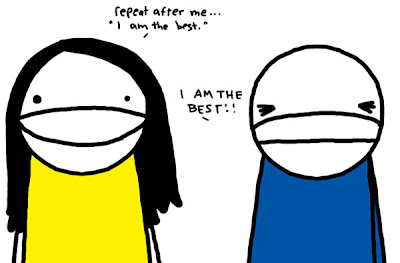
I suppose just because you think you are good at something, doesn't necessarily make it true, but how much happier would you be if you had blind ignorance :)
In an article by Jonah Lehrer today, Self Esteem, it turns out that the better you feel about yourself does not translate directly into actual academic achievement:
"Self-esteem has gone up in the United States; achievement has not. If anything, compared with other countries, we have done worse, but our kids feel really good about themselves on average."
Now academic achievement and achievement in life are two very different things, and how do you even define achievement in life these days - everyone has different measures for success - but it will be interesting to see where these kids they are following end up in life.
It's quite a liberating discovery if in fact self esteem is not critical to success. It's painful to constantly question your own abilities and wonder when the world will finally see through your feigned attempts to brush over inadequacies.... I remember Padraig O'Morain's article about just this topic - The Common Experience of Feeling Like an Imposter... but if you knew that the low self esteem and consequent fear of rejection and failure are not necessarily detrimental to your ability to success, then you can go on and feel them in... comfort, I guess.
Those "kicks in the face", thanks Maura for the terminology, that we struggling writers are constantly on the receiving end of, must feel like... generous helpings of praise? How does that work?
I suppose having blind faith in an ability that may not exist can lead to embarrassing outcomes. That must be the reason for those deluded people who enter The X Factor, Pop Idol, or You're a Star, singing completely out of tune. I always wondered what was going on there...

I suppose just because you think you are good at something, doesn't necessarily make it true, but how much happier would you be if you had blind ignorance :)
Tuesday, June 30, 2009
Have you become your own worst employer?
When you leave a 9-5 job, it seems obvious that you can now embrace a new you. You can relinquish the classic structure and etiquette typical of a worker bee in a corporate environment and be finally free. You are free to grow dreadlocks, or shave your head, you can get piercings in all sorts of visible places, or big dirty tattoos, why not? (Why all of the associations of freedom are based on this clichéd image are not something to be proud of, but there you go...) However, unless you have a deep desire to damage or inflict pain on your body, or hair for that matter, in order to prove to yourself, or anyone else, that you are now an entrepreneur, this may not be the correct course of action for you.
You could express your own individual personality and style through following fashion trends of your own choosing, instead, right? Not having to worry about what your employer or fellow workers would deem suitable now that you run the show, you can be free to express your own true style and identity. However, it may come to your attention that the image of the new company that you are bringing into existence has its own identity, and its one that you need to impart to the world, fashionably, in order for it to be successful. It may only represent part, but not all of who you are; it may even hold a personality of a particularly distinct category. Do you now find yourself being in a sense, your own “employer” and imparting certain traditions and rules to the clothes that you now deem suitable for [insert your company name here].
So not being able to quite clearly be who you are with body art, or indeed through fashion choices, you may think that at the very least, you can be honest in your writing; you can be free of the shackles imposed by previous employers who controlled the way in which you expressed your ideas and thoughts on paper. Remember the manner of speaking in emails, documents and proposals in industry, all formalised and following a regulated structure and format. Yuck!
But has it occurred to you to take a look at what you are writing these days, or should I say, how you are writing? Is there an air of, dare I say, regulated structure and formal phrasing? Any
“Dear esteemed sir,
Please find attached the proposal that we heretofore discussed on the telephone.
Please don’t hesitate to get in touch with me at your leisure if this would be something that you would like to consider.
Thanking you kindly in advance for your highly valued contributions,
With kind regards” kind of malarkey?
Who are you becoming? This is not supposed to be happening now that you are “free”, remember?! What happened to illusions of emails with,
“Hi stevie,
Here’s that doc we chatted about earlier. Get back to me if you like it, if not, your loss!
Later,”
Where is the right balance you may ask? Honesty in writing can be dangerous, if you are telling people to fuck off on a regular basis, even if that’s what you do indeed feel like saying, you may never make any money...
Seriously though, if you write with too much structure, and prevent emotion from flowing freely through your words, if you dress too much for success and cover up the body art to fit into your idea of the identity of your company, then you risk hiding your passion and enthusiasm for [insert company name here], and you may never be able to attract “the people who care” to your ideas for change.
It takes guts to show the true you, and I remember to respect those who are following their own rhythm in life, saying who the fuck cares. I am listening hard to my own advice here, the message lies behind the humour, somewhere.
All ideas presented here are fiction and do not in anyway represent the opinions of the writer...
You could express your own individual personality and style through following fashion trends of your own choosing, instead, right? Not having to worry about what your employer or fellow workers would deem suitable now that you run the show, you can be free to express your own true style and identity. However, it may come to your attention that the image of the new company that you are bringing into existence has its own identity, and its one that you need to impart to the world, fashionably, in order for it to be successful. It may only represent part, but not all of who you are; it may even hold a personality of a particularly distinct category. Do you now find yourself being in a sense, your own “employer” and imparting certain traditions and rules to the clothes that you now deem suitable for [insert your company name here].
So not being able to quite clearly be who you are with body art, or indeed through fashion choices, you may think that at the very least, you can be honest in your writing; you can be free of the shackles imposed by previous employers who controlled the way in which you expressed your ideas and thoughts on paper. Remember the manner of speaking in emails, documents and proposals in industry, all formalised and following a regulated structure and format. Yuck!
But has it occurred to you to take a look at what you are writing these days, or should I say, how you are writing? Is there an air of, dare I say, regulated structure and formal phrasing? Any
“Dear esteemed sir,
Please find attached the proposal that we heretofore discussed on the telephone.
Please don’t hesitate to get in touch with me at your leisure if this would be something that you would like to consider.
Thanking you kindly in advance for your highly valued contributions,
With kind regards” kind of malarkey?
Who are you becoming? This is not supposed to be happening now that you are “free”, remember?! What happened to illusions of emails with,
“Hi stevie,
Here’s that doc we chatted about earlier. Get back to me if you like it, if not, your loss!
Later,”
Where is the right balance you may ask? Honesty in writing can be dangerous, if you are telling people to fuck off on a regular basis, even if that’s what you do indeed feel like saying, you may never make any money...
Seriously though, if you write with too much structure, and prevent emotion from flowing freely through your words, if you dress too much for success and cover up the body art to fit into your idea of the identity of your company, then you risk hiding your passion and enthusiasm for [insert company name here], and you may never be able to attract “the people who care” to your ideas for change.
It takes guts to show the true you, and I remember to respect those who are following their own rhythm in life, saying who the fuck cares. I am listening hard to my own advice here, the message lies behind the humour, somewhere.
All ideas presented here are fiction and do not in anyway represent the opinions of the writer...
Monday, June 29, 2009
Dreaming of paid time off and learning holidays in the sun

Damn Gary Quinn and his surf board toting article in the Irish Times. Is he paid by the Irish Times to take such a holiday, or is he sponsored by eurolanguages.com, both of whom benefit from his Spanish in the surf? What a perfect job, and why don't I have it? His magical tale wraps itself around my brain, like a boa constrictor, threatening to squish my happiness and delusion in my own day to day life. A week in Spain eating glorious Spanish food, taking afternoon siestas, and lapping up the lessons in the surf, while learning a language sounds utterly sublime as I sit mired in to-do lists that never seem to get any shorter. The break sounds utterly delicious, and I am wracking my brains trying to figure out how I can build a business that will enable me to take the time off and indeed pay for such an adventure... today.
I check out the website recommended, and torture myself looking at French packages with cooking lessons attached. "The reviews are all so positive," I notice, "and they are so cheap, especially considering what you are gaining."
Clicking on a link where I am shown the registration fee that wasn't included in the original price, I hear the voice in my head wavering a little, "Even if they do add on a whopping registration fee, and aren't including the cost of food or accommodation... these things will sort themselves out..."
Who am I kidding? Deluded I must be as I have neglected to remember that I am bordering on a vegan and I can't think of anything worse than seeing all that cream, cheese and butter not to mention meat, being used in French delicacies that I can't sample. Obviously the article has found a part of my brain that has no logic, and imbedded itself so deeply that reality has gone out the window.
What happened to my idea of living in the now, in the moment, not needing to buy things or be a "consumer".
I resigned from my job a couple of weeks ago, convinced that the business idea that we had, www.meetforeal.com, was strong enough, is strong enough, to create jobs for both myself and my partner. Although I still believe this to be true, it sometimes breaks my heart to see how long the road is ahead, and how tough it's going to be to get through the Seth Godin "Dip" and into the land of "scarcity creating value", when our events will effortlessly pull in both the sponsors and the punters. I know that day exists, but how far away it is I cannot measure, and until I can see it in my sights, its saliva drooling, logic out the window dreaming for me, and a matter of postponing all those learning holidays in the sun until a future date... Just another to-do list for me to monitor.
Are you an extravert or an introvert?
Reading Dorothy Rowe's book "Dorothy Rowe's Guide to life" changed the way I see the world. For anyone who hasn't heard her theories, I'll try and explain my favourite one.
She reckons that we are all either introverts, or extraverts. Not extrovert but extravert, with an 'a' (brings up memories of explaining meetforeal, with one 'r':-)).
Before I explain the difference, let me just clarify that apart from this initial identification which she perceives to be a determined characteristic, she then goes on to say that the secret of life is that we are capable of changing anything in our lives. That it is our specific set of beliefs, and the meaning structure which we have developed, unique to each individual, that shapes our view of the world around us, and this structure can be changed by allowing ourselves to see the structure itself, and step outside of it.
This links in nicely with the event we are holding in a couple weeks for anyone who is interested in thinking, and awareness, and how we can change the way we see the world, and the difficulties we perceive that we face... more details here; but anyway, I'll stop waffling and get to the point!
Introverts and extraverts can have the same external results: in this simple exercise you can see that Mary feels it's important for her to be on time for meetings, but when you do the ladder exercise, you can see that depending on her reasons behind the act, she shows whether she is an introvert or an extravert. So it's the reasons behind WHY you do something, not necessarily the behaviour itself.
Let me do the ladder exercise.
So Mary likes being on time for meetings, she feels its important.
Interviewer: "Why?"
Mary: "Because I don't want to be late"
Interviewer: "But why don't you want to be late?"
Mary: "Because I want to get the most out of the meeting, be fresh and alert and not stressed"
Interviewer: "And why is it important for you not to be stressed?"
Mary: "Because then I can achieve my best."
Interviewer: "Why is it important for you to achieve your best?"
Mary: "Because it's important for me to achieve my best!"
This is where the ladder may run out... and if it does, it can be said that Mary may be an introvert: she experiences her sense of existence as achieving.
If however Mary continues and says:
Mary: "Because it's important to me that the people at the meeting see me at my best, and have the best possible opinion of me."
Interviewer: "So is it important that others see you at your best?"
Mary: "Yes, of course."
Here, Mary shows that she may be an extravert, that she experiences her sense of existence as being in relationship to other people.
Introvert:Experiencing your sense of existence as developing, organizing clarifying, achieving; seeing the threat of the annihilation of your existence as disorder, mess and chaos.
Extravert:Experiencing your sense of existence as being in relationship to other people; seeing the threat of annihilation of your existence as rejection and abandonment.
An Introvert will be more inclined to doubt his/her external reality e.g. feeling of not really being there.
An Extravert will be more inclined to doubt his/her internal reality e.g. sense of loss of self.
This is because the Introvert listens more to their internal reality, while the Extravert listens more to their external reality.
An Introverts idea of being alone is of themselves on an empty planet.
An Extraverts idea of being alone is of being isolated and often rejected.
An Introvert's ultimate aim is personal achievement.
An Extravert's ultimate aim is good relationships.
An Introvert will leave a group of people because they feel over-stimulated.
An Extravert will leave a group of people because they fear rejection.
However, as I mentioned, being an introvert, or extravert can have similar results externally. And depending on how good you feel about yourself, can alter how you express this part of yourself.
Obviously, this is a short, very simplistic, explanation, but if you find it interesting, she has written books on the subject.
She says that in almost every couple, there is an introvert and an extravert, even though initially it may seem like both of you are one or the other.
So I found that I am an extravert, which seemed initially odd to me, because that means Adrian is the introvert, yet he is the one holding "talking to strangers" workshops, but it's obvious that he pushes himself to achieve these things as he feels they are important in his life.
And on further investigation, I remember writing this diary entry, below, over 6 months ago, and after reading it, I know I am an extravert! That combined with the fact that I struggled to write this because its important for me to please my readers, and I don't want to turn you against Dorothy Rowes writing because of something I have mentioned here!! But anyhow, here's some of my journal, maybe it will resonate with some of you extraverts, and if it doesn't, I guess you are an introvert... :-)
By the way why is this important you may ask?
Because she says that for introverts, it's important that they have something in their lives through which they can fulfil their requirement for a sense of achievement; and for extraverts, it's important that they have a close network of people who they can feel identified with, who support them and love them. So its something to keep in mind.
My diary:
I was cycling home today from work, and it just occurred to me. What if I had no where to go? And why do I need to get home so badly anyhow? Do I have something pressing to do? I know that when I get home, I will wonder what to do next. And if I had no home to go to, no destination in mind, what would I do? Where would I go?
I suppose we fight our whole lives not to have to have the sensation of not having a home to go to. Except people who are homeless and choose to be. Perhaps I will one day find our their reasoning behind it. Or the travelling community, or gypsies, who spend their whole lives moving from one point to the next. However they have a home, their caravan.
As the world is becoming globalised, for the first time we do have the choice of not going home, of not going to work, of taking a flight and just arriving with no destination in mind, no hotel booked. All you need is money and perseverance and a lot of balls.
That, coupled with the new sensation of meeting new people, new faces everyday, means that the world we live in is drastically different from that which we evolved in. And as such, these sensations are both petrifying and incredibly satisfying. Meeting new people leaves you with a temporary buzz, and the act of stepping out of your comfort zone to even spend a few days in another country, far from home, is tempting enough to keep a number of huge businesses ticking over.
But what if we were to only meet new people. And what if we were to never settle down. What if that holiday became a life, and the movement ensured that you never met the same person enough times to get to know them. That would be isolation of the highest order. People do it. Jobs are the main reason why, but there are others who seek such isolation, and after a number of years of this behaviour, the people they knew in a place called "Home" either move on, or die away, and the language attached to the birthplace become meddled with the languages of current destinations, and there no longer is a home to go back to.
I wonder what that feels like. Just the thought of not having a destination after I'm finished work causes my heart to beat a little faster. I can't imagine what it would be like to be without a home on this earth.
I often seek isolation, avoiding my workmates in order to have lunch alone. I take it outside or I deliberately go at a time when I know they will be busy. And I enjoy it. That time when I am alone, free to do as I wish. No conversations to attempt, no small talk to create, I am satisfied and comfortable.
But after a few days of isolating lunches, I realise that I am out of the loop, I have no friends at work, no one to talk to, no one to tell my news to. I have no small talk to make as I have spent so much time by myself that they don't open up to me, and I am lost in conversations. So those few moments I steal to spend alone have repercussions beyond measure. And yet I still delight in them. The forbidden act, which I know is all the more forbidden now because it is not a productive behaviour.
And as I cycle home, I know that I can stray off the path, I can bypass home and go into town, there is nothing stopping me. But somehow there is a sensation that it is wrong. And that emptiness fills me as I realise that if I do not go home, that there is no reason to be here. Is there a meaning to life if you have no home to go to? If you have no people to talk to? If you have no one who knows you, loves you or misses you?
She reckons that we are all either introverts, or extraverts. Not extrovert but extravert, with an 'a' (brings up memories of explaining meetforeal, with one 'r':-)).
Before I explain the difference, let me just clarify that apart from this initial identification which she perceives to be a determined characteristic, she then goes on to say that the secret of life is that we are capable of changing anything in our lives. That it is our specific set of beliefs, and the meaning structure which we have developed, unique to each individual, that shapes our view of the world around us, and this structure can be changed by allowing ourselves to see the structure itself, and step outside of it.
This links in nicely with the event we are holding in a couple weeks for anyone who is interested in thinking, and awareness, and how we can change the way we see the world, and the difficulties we perceive that we face... more details here; but anyway, I'll stop waffling and get to the point!
Introverts and extraverts can have the same external results: in this simple exercise you can see that Mary feels it's important for her to be on time for meetings, but when you do the ladder exercise, you can see that depending on her reasons behind the act, she shows whether she is an introvert or an extravert. So it's the reasons behind WHY you do something, not necessarily the behaviour itself.
Let me do the ladder exercise.
So Mary likes being on time for meetings, she feels its important.
Interviewer: "Why?"
Mary: "Because I don't want to be late"
Interviewer: "But why don't you want to be late?"
Mary: "Because I want to get the most out of the meeting, be fresh and alert and not stressed"
Interviewer: "And why is it important for you not to be stressed?"
Mary: "Because then I can achieve my best."
Interviewer: "Why is it important for you to achieve your best?"
Mary: "Because it's important for me to achieve my best!"
This is where the ladder may run out... and if it does, it can be said that Mary may be an introvert: she experiences her sense of existence as achieving.
If however Mary continues and says:
Mary: "Because it's important to me that the people at the meeting see me at my best, and have the best possible opinion of me."
Interviewer: "So is it important that others see you at your best?"
Mary: "Yes, of course."
Here, Mary shows that she may be an extravert, that she experiences her sense of existence as being in relationship to other people.
Introvert:Experiencing your sense of existence as developing, organizing clarifying, achieving; seeing the threat of the annihilation of your existence as disorder, mess and chaos.
Extravert:Experiencing your sense of existence as being in relationship to other people; seeing the threat of annihilation of your existence as rejection and abandonment.
An Introvert will be more inclined to doubt his/her external reality e.g. feeling of not really being there.
An Extravert will be more inclined to doubt his/her internal reality e.g. sense of loss of self.
This is because the Introvert listens more to their internal reality, while the Extravert listens more to their external reality.
An Introverts idea of being alone is of themselves on an empty planet.
An Extraverts idea of being alone is of being isolated and often rejected.
An Introvert's ultimate aim is personal achievement.
An Extravert's ultimate aim is good relationships.
An Introvert will leave a group of people because they feel over-stimulated.
An Extravert will leave a group of people because they fear rejection.
However, as I mentioned, being an introvert, or extravert can have similar results externally. And depending on how good you feel about yourself, can alter how you express this part of yourself.
Obviously, this is a short, very simplistic, explanation, but if you find it interesting, she has written books on the subject.
She says that in almost every couple, there is an introvert and an extravert, even though initially it may seem like both of you are one or the other.
So I found that I am an extravert, which seemed initially odd to me, because that means Adrian is the introvert, yet he is the one holding "talking to strangers" workshops, but it's obvious that he pushes himself to achieve these things as he feels they are important in his life.
And on further investigation, I remember writing this diary entry, below, over 6 months ago, and after reading it, I know I am an extravert! That combined with the fact that I struggled to write this because its important for me to please my readers, and I don't want to turn you against Dorothy Rowes writing because of something I have mentioned here!! But anyhow, here's some of my journal, maybe it will resonate with some of you extraverts, and if it doesn't, I guess you are an introvert... :-)
By the way why is this important you may ask?
Because she says that for introverts, it's important that they have something in their lives through which they can fulfil their requirement for a sense of achievement; and for extraverts, it's important that they have a close network of people who they can feel identified with, who support them and love them. So its something to keep in mind.
My diary:
I was cycling home today from work, and it just occurred to me. What if I had no where to go? And why do I need to get home so badly anyhow? Do I have something pressing to do? I know that when I get home, I will wonder what to do next. And if I had no home to go to, no destination in mind, what would I do? Where would I go?
I suppose we fight our whole lives not to have to have the sensation of not having a home to go to. Except people who are homeless and choose to be. Perhaps I will one day find our their reasoning behind it. Or the travelling community, or gypsies, who spend their whole lives moving from one point to the next. However they have a home, their caravan.
As the world is becoming globalised, for the first time we do have the choice of not going home, of not going to work, of taking a flight and just arriving with no destination in mind, no hotel booked. All you need is money and perseverance and a lot of balls.
That, coupled with the new sensation of meeting new people, new faces everyday, means that the world we live in is drastically different from that which we evolved in. And as such, these sensations are both petrifying and incredibly satisfying. Meeting new people leaves you with a temporary buzz, and the act of stepping out of your comfort zone to even spend a few days in another country, far from home, is tempting enough to keep a number of huge businesses ticking over.
But what if we were to only meet new people. And what if we were to never settle down. What if that holiday became a life, and the movement ensured that you never met the same person enough times to get to know them. That would be isolation of the highest order. People do it. Jobs are the main reason why, but there are others who seek such isolation, and after a number of years of this behaviour, the people they knew in a place called "Home" either move on, or die away, and the language attached to the birthplace become meddled with the languages of current destinations, and there no longer is a home to go back to.
I wonder what that feels like. Just the thought of not having a destination after I'm finished work causes my heart to beat a little faster. I can't imagine what it would be like to be without a home on this earth.
I often seek isolation, avoiding my workmates in order to have lunch alone. I take it outside or I deliberately go at a time when I know they will be busy. And I enjoy it. That time when I am alone, free to do as I wish. No conversations to attempt, no small talk to create, I am satisfied and comfortable.
But after a few days of isolating lunches, I realise that I am out of the loop, I have no friends at work, no one to talk to, no one to tell my news to. I have no small talk to make as I have spent so much time by myself that they don't open up to me, and I am lost in conversations. So those few moments I steal to spend alone have repercussions beyond measure. And yet I still delight in them. The forbidden act, which I know is all the more forbidden now because it is not a productive behaviour.
And as I cycle home, I know that I can stray off the path, I can bypass home and go into town, there is nothing stopping me. But somehow there is a sensation that it is wrong. And that emptiness fills me as I realise that if I do not go home, that there is no reason to be here. Is there a meaning to life if you have no home to go to? If you have no people to talk to? If you have no one who knows you, loves you or misses you?
Subscribe to:
Posts (Atom)

